Point-to-point integrations
Separate development and credentials for every channel or provider.
Connect your core banking system, BPM, applications, and operational platforms to a single layer for managing channels, templates, business rules, failover, monitoring, and end-to-end traceability.
When each system connects directly to every channel or provider, the organization duplicates integrations, rules, templates, and controls. Every change increases maintenance requirements and dependence on technical teams.
The Hub introduces a common layer for evolving channels, content, and delivery policies without constantly modifying source systems.
Separate development and credentials for every channel or provider.
Retries, schedules, and content implemented across multiple systems.
Statuses, errors, and evidence scattered across applications and providers.
Business systems report what happened. DANAconnect manages how, when, and through which channel it should be communicated.
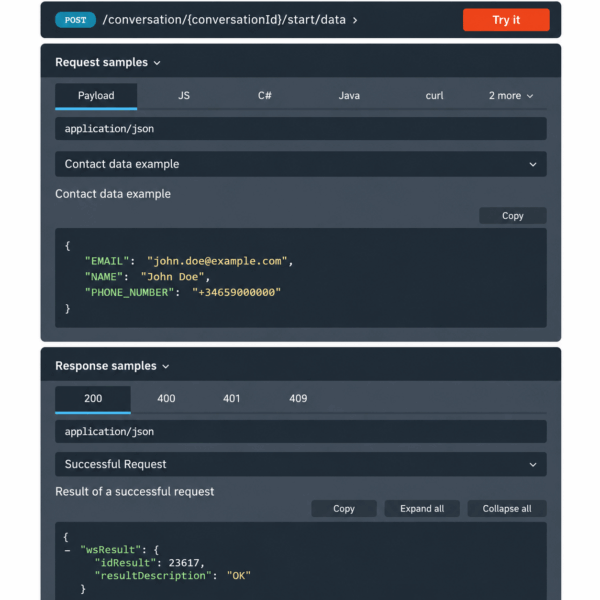
Integrate core systems, BPM, origination systems, apps, and operational platforms through APIs, web services, webhooks, or Cloud SMTP.
Apply templates, variables, priorities, validations, delivery windows, retries, and fallback rules.
Distribute through the defined channels and centralize statuses, errors, responses, and evidence for every interaction.
Receive events from different systems through a common interface and reduce channel-specific connections.
Define structures, variables, metadata, identifiers, and statuses for each notification type.
Centralize channel-specific messages with variables, conditional content, and version control.
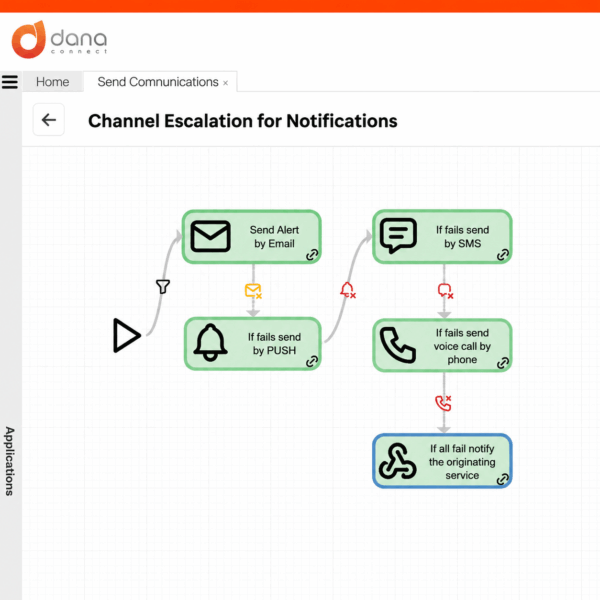
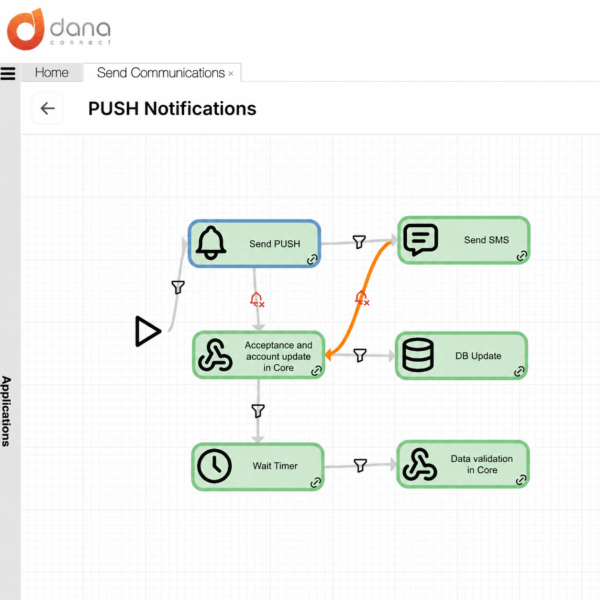
Select channels, providers, and actions based on the event, criticality, segment, schedule, or internal policy.
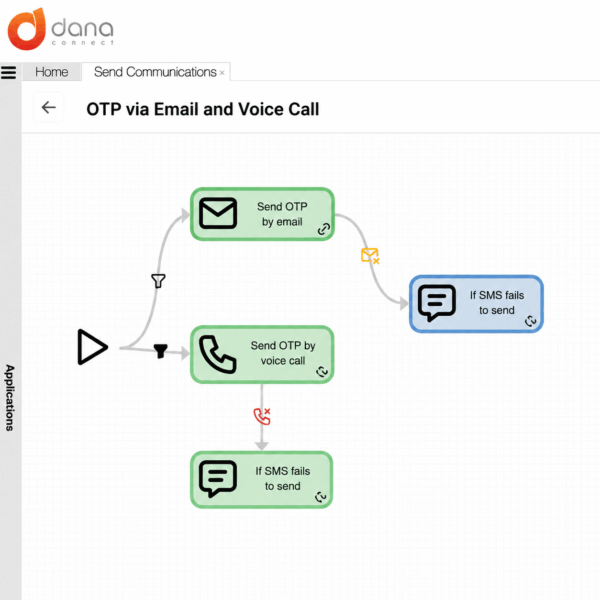
Trigger alternative routes when a channel fails, does not deliver, or becomes unavailable.
Review reception, processing, sending, delivery, errors, and responses in a centralized history.
The Hub works with Document Manager to generate, retrieve, index, protect, and deliver invoices, account statements, policies, contracts, and other documents within the same transactional flow.
OTP, access notifications, fraud alerts, and sensitive changes.
Confirmations, status changes, and process results.
Due dates, charges, reconciliations, and receipts.
Invoices, account statements, policies, and contracts.
Regulatory notices and communications that require evidence.
| Capability | Direct integrations by channel | Transactional Notifications Hub |
|---|---|---|
| Integration | A separate connection for every channel or provider. | A centralized layer for business systems. |
| Delivery logic | Distributed across applications and custom development. | Managed through configurable rules in the Hub. |
| Templates | Dependent on each integration. | Centralized, dynamic, and adapted by channel. |
| Failover | Requires dedicated development and maintenance. | Configurable alternative routes and retries. |
| Monitoring | Information fragmented across providers. | Centralized visibility across the entire lifecycle. |
| New channels | Requires changes to source systems. | Added through the orchestration layer. |
| Document delivery | Requires additional components to generate, protect, and publish documents. | Document Manager integration within the same flow. |
| Audit | Evidence scattered across different platforms. | Centralized history and traceability. |
Centralize access controls, operational policies, traceability, and evidence throughout the communication lifecycle, even when multiple systems, channels, and providers are involved.
Connect your systems to a common infrastructure for managing the delivery, evolution, and audit of critical communications.
Request a technical demo